INCLUSIVE KARATE FOR EVERYONE
Our classes at Inclusion Sports Performance Training are designed for children, teens, and adults of ALL abilities! We maintain the integrity of authentic Shotokan training while thoughtfully adapting structure, pacing, and support so that every student can find their own path within the practice.
Karate is not about perfection and it never has been. It's about progress.
It's about structure, repetition, focus, resilience, and belonging.
Below you’ll find how our program at Inclusion Sports Performance Training supports a wide range of students and what families can expect.
Click a link to jump to a section:
Karate for People Who Are Neurodivergent
Karate for People with Physical Disabilities
Karate for People with Intellectual or Cognitive Disabilities
Karate for People with Psychological or Social Challenges
A Unique Feature of Our Program

Neurodivergent Students
Structured Practice for Focus, Regulation, and Confidence
We welcome students with:
-
Autism Spectrum Disorder (ASD)
-
Asperger’s Syndrome
-
ADHD / ADD
-
Sensory Processing Disorder
-
Dyslexia and related learning differences
-
Social communication differences
-
Executive function challenges
-
Anxiety disorders
-
OCD
-
Tourette syndrome
Why Karate Works
Shotokan training is highly structured and predictable. Classes follow consistent patterns, use clear expectations, and rely on repetition. Many neurodivergent students thrive in environments that are:
-
Calm
-
Sequential
-
Rule-based
-
Movement-oriented
-
Free of chaotic overstimulation
Over time, students often develop:
-
Improved emotional regulation
-
Increased frustration tolerance
-
Better impulse control
-
Greater body awareness
-
Stronger social confidence
-
Natural peer friendships built on shared practice
Supports & Adaptations
-
Clear visual and verbal instruction
-
Demonstration-first teaching style
-
Slower pacing when needed
-
Reduced sensory overload (controlled noise levels)
-
Defined personal space boundaries
-
Predictable class structure
-
Break options without penalty
-
One-on-one cueing when appropriate
-
Parent or aide participation allowed
Students with Physical Disabilities
Strength, Adaptation, and Capability
We welcome students with:
-
Cerebral palsy
-
Hemiplegia
-
Paraplegia
-
Spinal cord injuries
-
Muscular dystrophy
-
Limb differences
-
Coordination disorders
-
Mobility impairments
-
Chronic health conditions
-
Use of assistive devices (braces, walkers, wheelchairs)
Why Karate Works
Shotokan is adaptable without losing its structure. Karate is about:
-
Stability
-
Balance
-
Controlled movement
-
Intent
-
Precision
Students train within their range of motion and capacity. Progress is measured individually.
Over time, students often experience:
-
Improved balance and coordination
-
Increased muscular strength
-
Better posture
-
Greater physical independence
-
Expanded movement confidence
-
Stronger self-image
Supports & Adaptations
-
Modified stances
-
Seated technique options when appropriate
-
Range-of-motion based execution
-
Partner adjustments in paired drills
-
Reduced impact contact
-
Emphasis on control over speed
-
Incremental strength development
-
Flexible participation in partner drills
-
Individualized goal setting
-
Parent or aide participation allowed
Students with Intellectual or Cognitive Disabilities
Clarity, Repetition, and Achievable Progress
We welcome students with:
-
Down syndrome
-
Intellectual disability
-
Developmental delay
-
Global developmental delay
-
Processing disorders
-
Language delays
-
Memory challenges
Why Karate Works
Karate teaches through repetition.
Repetition builds familiarity.
Familiarity builds confidence.
Students progress step-by-step through:
-
Clear movements
-
Defined sequences (kata)
-
Straightforward goal markers
Over time, students often develop:
-
Increased attention span
-
Improved task completion
-
Stronger self-confidence
-
Better ability to follow multi-step instructions
-
Pride in accomplishment
-
Greater independence
Supports & Adaptations
-
Short, clear instructions
-
Demonstration before explanation
-
Repeated practice cycles
-
Smaller skill breakdowns
-
Encouragement-based correction
-
Extra time for processing
-
Simplified kata sequencing when needed
-
Patient, structured repetition
-
Parent or aide participation allowed
Students with Social or Psychological Challenges
Calm Strength and Inner Stability
We welcome students with:
-
Social anxiety
-
Generalized anxiety
-
Depression
-
Trauma history
-
Behavioral challenges
-
Low self-esteem
-
Bullying history
-
School avoidance issues
Why Karate Works
Shotokan develops calm under pressure.
Slow kata builds emotional control.
Structured kumite builds courage.
Milestone-based rank progression builds earned confidence.
Over time, students often develop:
-
Greater emotional stability
-
Reduced anxiety
-
Increased resilience
-
Improved social comfort
-
Healthy assertiveness
-
Quiet self-confidence
Supports & Adaptations
-
Non-competitive training emphasis
-
Slow kata sessions for regulation
-
Clear behavioral expectations
-
Controlled partner work
-
Respect-based class culture
-
Positive reinforcement
-
No humiliation or intimidation
-
Safe space to progress at one’s own pace
-
Parent or aide participation allowed
A Unique Feature of Our Program
All students are welcome to have:
-
A parent
-
A sibling
- A friend
-
A caregiver
-
A personal aide
train alongside them as full participants in the class at no additional charge.
This provides:
-
A familiar face for reassurance
-
Physical assistance if needed
-
Emotional support
-
Shared experience
-
Family bonding
-
Increased long-term commitment to practice
Karate is better when practiced together.
What Makes Our Program Different
We do not dilute the art.
We teach authentic Shotokan karate: the same structured, time-tested system practiced worldwide, while ensuring it is accessible and adaptable.
This is not “special needs karate.”
This is real karate, taught responsibly and inclusively.
Every student trains with dignity.
Every student progresses at their own pace.
Every student belongs.
The Long-Term Benefits
Students who remain in the program often gain:
-
Self-discipline
-
Emotional regulation
-
Body control
-
Persistence
-
Social belonging
-
Confidence built on real ability
-
A lifelong practice
Karate is not a short-term activity - it's a long-term, lifetime path.
And everyone deserves access to that path.
WHY THIS MATTERS TO US
Mercer County Shotokan karate club is a member of the Shotokan Karate Association, an organization founded in Bucks County, PA in 1968 by Sensei William Hodgkiss. Sensei Hodgkiss trained and earned his black belt with a legendary karate teacher in Trenton, NJ area - Preston Carter, Sr.
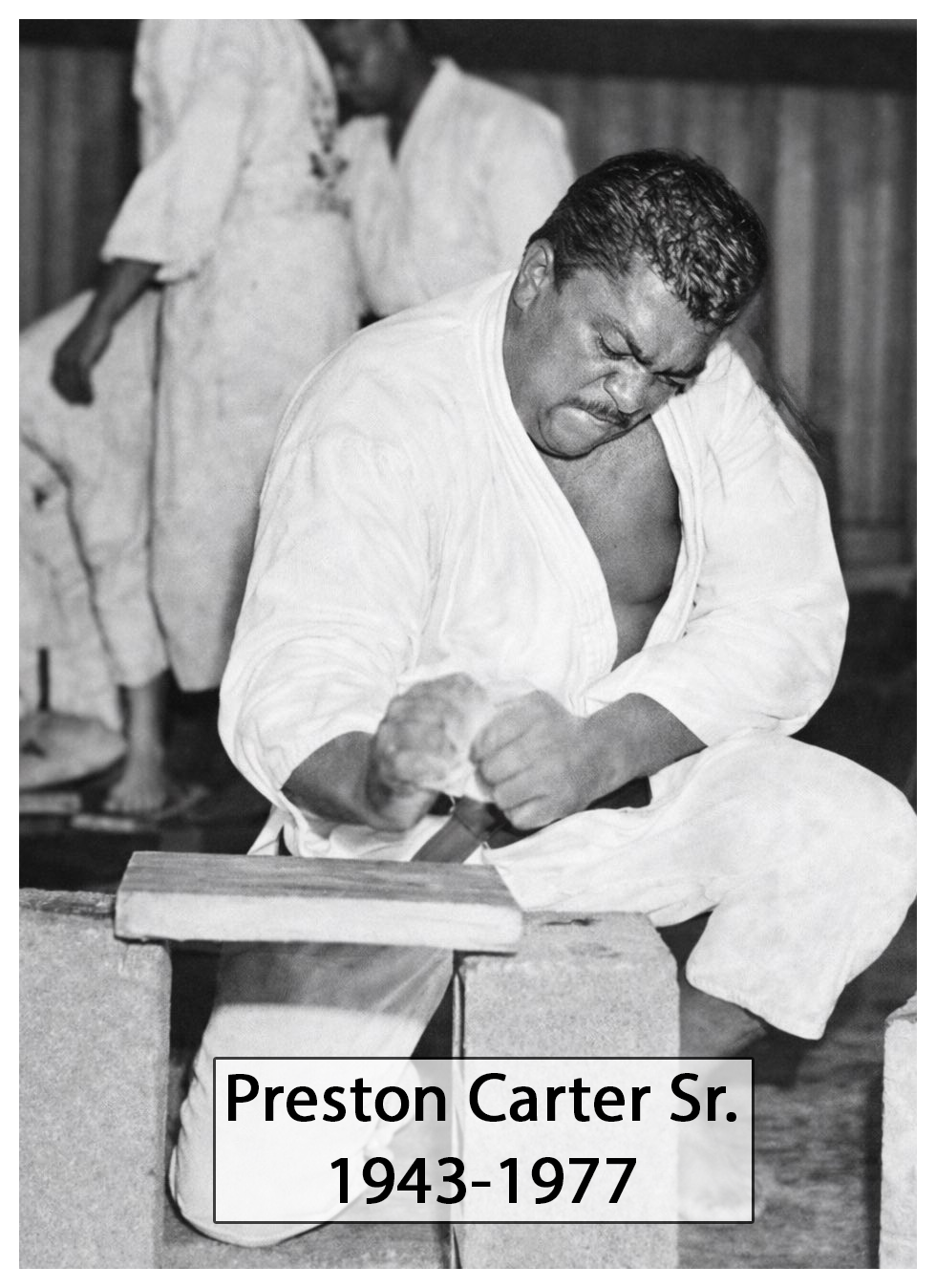 Sensei Preston Carter was a groundbreaking teacher who taught karate to thousands of students throughout the New York, New Jersey, and Pennsylvania regions. He was one the first African-American martial artists to be recognized as a master, and one of the first karate instructors to break color lines and welcome students of all races in the still highly-segregated era of 1960's karate.
Tragically, in 1972 he was shot in the back and paralyzed from the waist down.
Demonstrating his indominitable spirit, after a short time he returned to both teaching karate AND publicly demonstrating what was possible for those who used a wheelchair. He founded the first organization in the United States for martial artists with physical disabilities and in doing so, left a legacy of inspiration and inclusion that continues to impact the lives of people, generations later.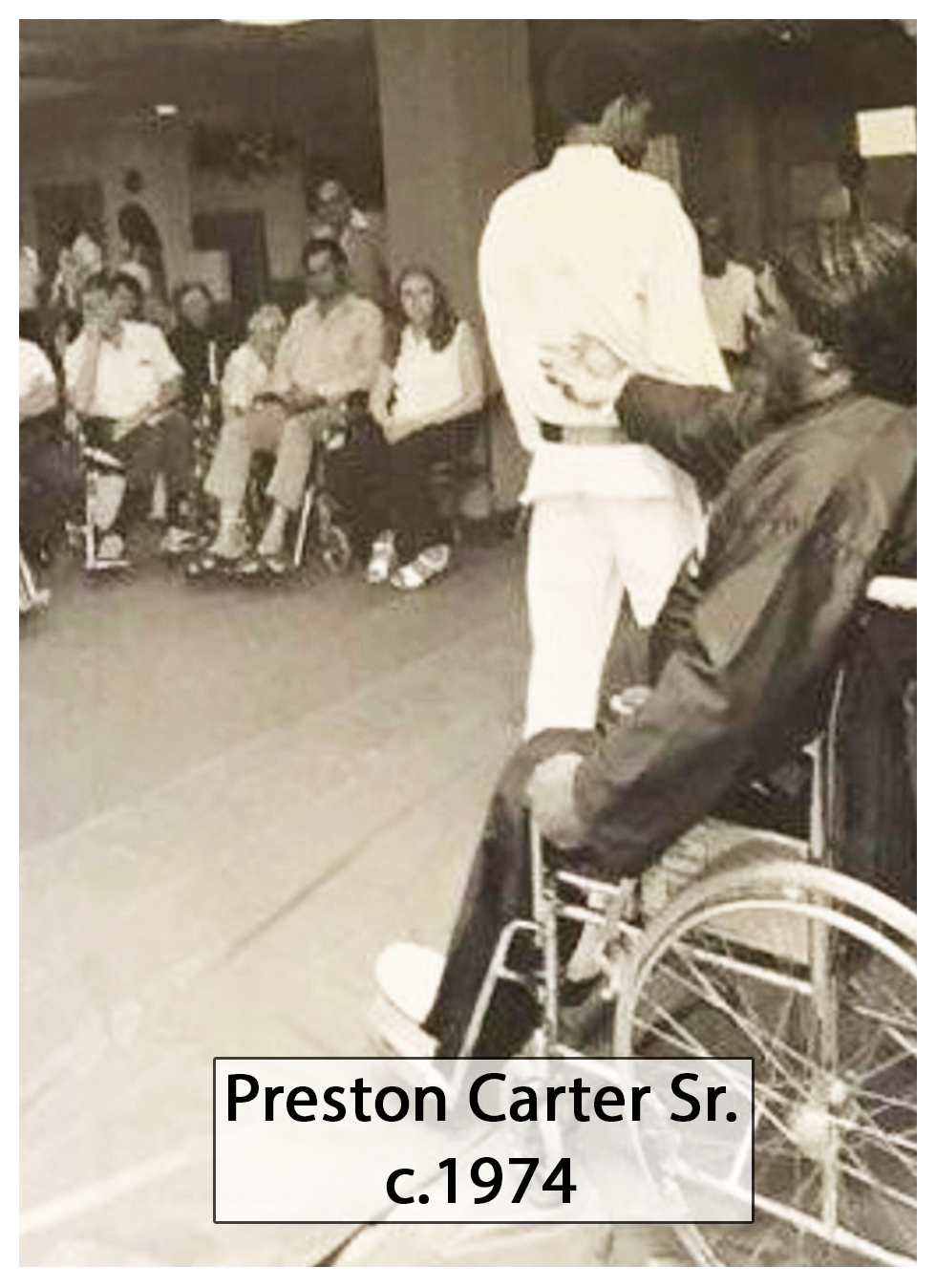
All of us who follow in his karate lineage are committed to continuing his legacy, providing access for all and helping everyone who would seek ways to break through barriers that, initially, seem insurmountable.
With a strong spirit, the right guidance, and unwavering support from the people around them, we believe that everyone can turn barriers into bridges.
At Mercer County Shotokan, inclusiveness is in our "karate DNA" and that's why this matters to us.
Ready to Learn More?
We invite you to:
-
Schedule a visit
-
Meet and speak directly with the instructor and other students
-
Observe or try a class at no charge
If you are unsure whether you or your child would be a good fit, we welcome your questions and are open to your suggestions about how to make our classes fit your needs. For information about the costs to train with us, please click here.
Our belief is simple:
If you can move, you can train.
If you can focus, you can grow.
If you are willing, there is a place for you here.